
World’s Largest Telescope Under Threat
World’s Largest Telescope Under Threat
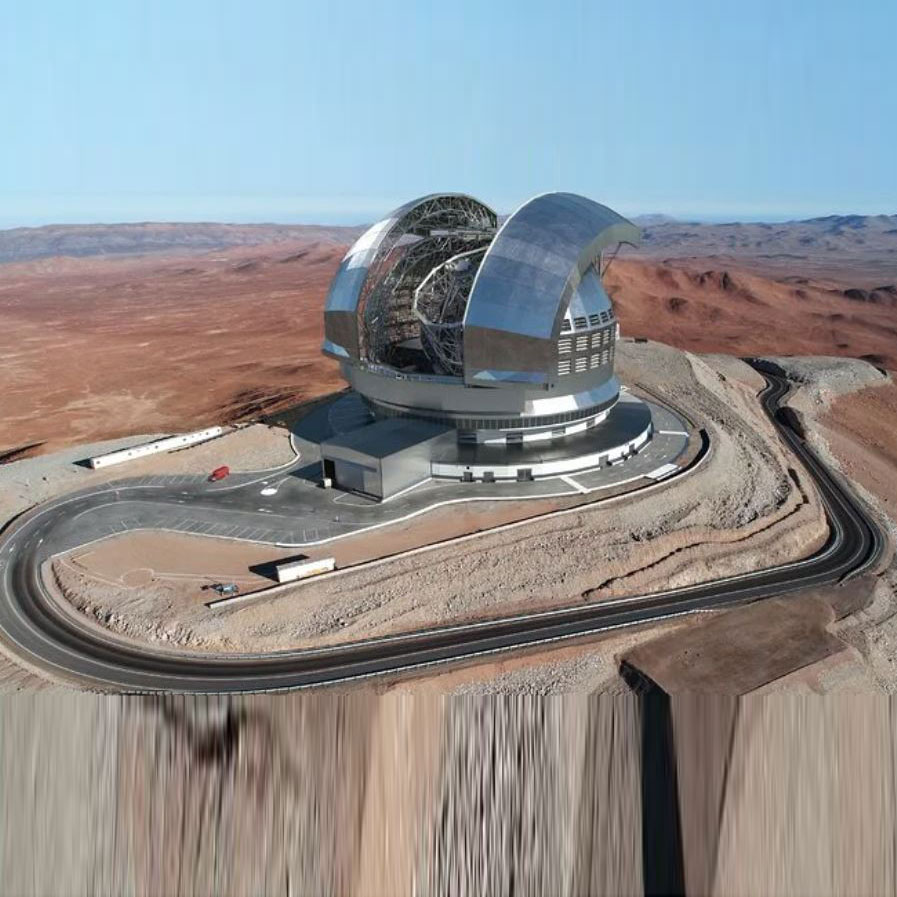
In the Atacama Desert of Chile, on top of Mount Cerro Armazones, the world’s largest telescope, the Extremely Large Telescope (ELT), is under construction. The site also hosts the Very Large Telescope (VLT), built by the European Southern Observatory. However, the ELT is now facing a potential threat due to the development of a large-scale renewable hydrogen production complex just a few kilometers away. This new facility, being built by the U.S. energy company AES Energy, could lead to light pollution that would significantly affect the performance of the Extremely Large Telescope.
Astronomers are concerned that this light pollution could disrupt the ELT’s operations and even impact the Very Large Telescope (VLT). Built in the 1990s, the VLT cost around $350 million to construct and contains four powerful telescopes, each with a diameter of 27 feet. The VLT has been instrumental in uncovering the mysteries of the universe.
Impact of the Hydrogen Production Complex
Javier Beken, the director of the European Southern Observatory, expressed concerns that the new hydrogen production complex could increase the brightness of the sky by up to 10%. This could eliminate the distinction between the world’s top observatories and general observation areas.
The Paranal Mountain in northern Chile’s Atacama Desert stands at 8,740 feet and remains one of the few places free from light pollution. With clear night skies for over 11 months each year, it provides an ideal location for astronomical observations. This is why the VLT was placed there. Over the years, scientists have used the VLT to conduct various missions, such as studying stars near the black hole at the center of the Milky Way Galaxy.
In a 2023 study, the VLT was ranked as one of the top 28 observatories in the world, with the least amount of light pollution. However, if the hydrogen production complex is built, the VLT could face a reduction in its ability to observe up to 30% fewer galaxies.
Source: Space.com